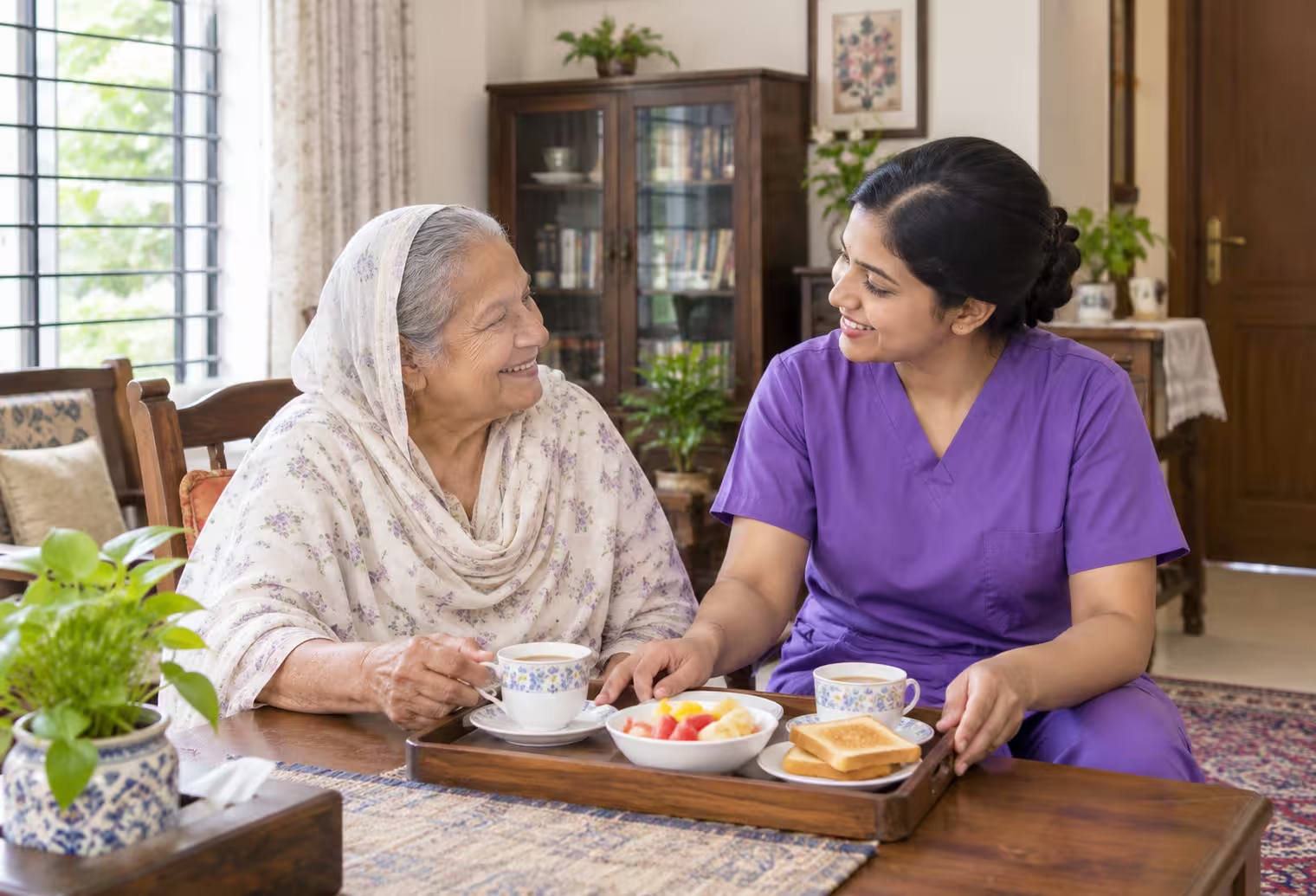

Home caregiver responsibilities include the daily help a patient or older family member needs to stay clean, comfortable and safe at home. Families often wonder what a caregiver will actually do, especially when hiring for the first time. A clear picture helps you set fair expectations and avoid confusion later. This guide explains the everyday duties, the limits of the role and what to agree on before care begins. For a wider overview, you can also read our caregiver service in Bangladesh guide.
[Featured image: upload a photo of a caregiver helping an older person at home]
File name: home-caregiver-responsibilities.webp
Alt text: Home caregiver responsibilities: caregiver helping an elderly patient with daily care at home
Understanding the Role in Simple Words
A home caregiver is a trained person who supports someone with daily activities in their own home. The person may be elderly, recovering after surgery, living with a long-term illness or unable to move without help.
Caregivers are not doctors or nurses. Instead, they provide practical, personal and emotional support that makes each day easier. For example, a caregiver may help with a bath, prepare a meal or sit with a patient who feels lonely. Many families arrange this through a professional caregiver service, so the caregiver is screened, matched and supported by an agency.
Main Home Caregiver Responsibilities Every Day
The exact tasks depend on the patient’s condition and the care plan agreed with the family. However, most caregivers share a common set of daily duties.
Hygiene, Bathing and Dressing Support
Personal care is usually the biggest part of the job. It protects the patient’s dignity, comfort and health.
- Hygiene and grooming: brushing teeth, washing the face and hands, combing hair and keeping clothes clean.
- Bathing and dressing: helping with a shower, sponge wash or bed bath, and choosing comfortable clothing.
- Toileting support: assisting with the toilet, commode, bedpan or continence products, always privately and respectfully.
A good caregiver explains each step before starting. In addition, they let the patient do as much as possible without help, because independence matters.
Meals, Mobility and Medication Reminders
Meals. Caregivers prepare food that follows the family’s instructions or the doctor’s diet advice. If the patient cannot eat alone, the caregiver offers feeding assistance slowly, in a comfortable position and in small amounts. They also encourage drinking water unless a doctor has limited fluids.
Mobility. Many patients need help to sit up, stand, walk or move from bed to chair. The caregiver supports these movements carefully and uses a walker or wheelchair when advised. Moving slowly and never forcing a stiff or painful limb is part of safe care.
Medication reminders. A caregiver can remind the patient to take medicines at the times the doctor has prescribed. Where the family has agreed, they may also hand over medicines that were already set out correctly. However, they should never change a dose, stop a medicine or give anything extra on their own.
Companionship and Emotional Support
Long illness and old age can feel lonely. For this reason, simple things matter: talking, listening, reading aloud, sharing a short walk or watching a favourite programme together. A caregiver who treats the patient with patience and respect often brings real comfort to the whole household.
Cleanliness and Daily Observation
A caregiver keeps the patient’s room tidy, changes bedding when needed and keeps walking paths clear. They also wash their hands often and keep supplies in an organised place.
Observation is just as important. Caregivers notice changes in appetite, sleep, mood, skin, breathing or confusion, and then tell the family promptly. They report what they see. They do not try to diagnose the cause.
Daily Home Caregiver Responsibilities: A Typical Routine
Every patient is different, so the routine below is only an example. Actual care depends on the patient’s needs and the agreed schedule.
- Morning: helping the patient wake up, use the toilet, wash and dress, then serving breakfast and giving medicine reminders.
- Afternoon: preparing lunch, encouraging rest, offering gentle movement if the doctor allows, and giving the family a short update.
- Evening: serving dinner, helping with evening hygiene, reminding about medicines and keeping the room calm and comfortable.
- Night: helping the patient settle, checking comfort, assisting with the toilet and staying alert for any needs. Some families arrange 12-hour care, while others prefer 24-hour support.
Simple Daily Checklist for Families
Families can use this list to understand what a good day of care looks like.
- Morning hygiene and dressing completed
- Meals and drinks offered on time
- Medicine reminders given as prescribed
- Safe walking or movement support provided
- Bedding, clothes and room kept clean
- Toileting needs handled with privacy
- Changes in condition noted and shared with the family
- Time spent talking or sitting with the patient
- Emergency contact numbers kept within reach
Home Caregiver Responsibilities for Elderly Patients
Caring for an older person means more than completing tasks. First, the caregiver should speak respectfully and allow the person to make small daily choices, such as what to wear or eat. The World Health Organization’s resources on ageing also stress the importance of supporting older people’s health, dignity and independence.
Fall prevention is another key duty. The caregiver keeps floors dry, clears clutter, makes sure there is good lighting and stays close during walking. If balance or strength is a concern, a doctor may suggest physiotherapy at home to support safe movement.
Finally, comfort matters every day. Good elderly care at home includes regular meals, rest, gentle activity and company, so the person feels settled in familiar surroundings.
Home Caregiver Responsibilities for Bedridden Patients
Bedridden patients depend on others for almost everything, so the caregiver’s role is more hands-on. Even so, the same principles of dignity and safety apply.
- Safe positioning: helping the patient change position and stay comfortable, following the schedule that the doctor or nurse recommends.
- Hygiene: regular washing, mouth care, clean clothes and dry bedding.
- Skin observation: looking for redness, sores or dampness, especially on areas that press against the bed, and reporting them quickly.
- Feeding and fluids: assisting with meals and drinks safely, as advised by the doctor.
- Daily activities: helping with toileting, dressing and moving between positions.
Suitable medical equipment such as hospital beds and pressure-relief mattresses can make this care safer and easier. A doctor or nurse can advise which equipment suits the patient.
Professional Boundaries and Limits
Clear limits protect the patient. A caregiver should not:
- diagnose an illness or guess the cause of symptoms,
- prescribe, change or stop medicines,
- perform medical procedures without proper training and authorisation,
- make clinical decisions that belong to a doctor or nurse.
When a patient’s health changes, the right step is to inform the family and the treating doctor. Families can also arrange a doctor home visit when a medical review is needed at home. Likewise, tasks such as injections, wound dressing or tube care should be handled by a qualified nurse through a home nursing care service.
In an emergency, such as severe breathing trouble, chest pain or loss of consciousness, call emergency services (999 in Bangladesh) and the family immediately.
Qualities That Make Care Reliable
Good care depends on character as much as training. Look for these qualities:
- Communication: explains clearly and listens to the patient and family.
- Patience: stays calm when the patient is slow, tired or upset.
- Reliability: arrives on time and follows the agreed routine.
- Observation: notices small changes and reports them.
- Respect: protects privacy, dignity and personal choices.
- Basic care knowledge: understands safe lifting, hygiene and feeding.
What Families Should Discuss Before Hiring
Clear agreement at the start prevents problems later. Before the caregiver begins, discuss:
- the daily tasks and the patient’s main needs,
- working hours, rest breaks and day or night shifts,
- the doctor’s instructions on diet, movement and medicines,
- emergency contacts and what to do in an emergency,
- how and when the caregiver will report to the family,
- the preferred gender of the caregiver and any household rules.
It also helps to compare caregiver packages and pricing so the plan matches both the patient’s needs and the family’s budget.
Frequently Asked Questions About Home Caregiver Responsibilities
What are the main responsibilities of a home caregiver?
A home caregiver helps with personal hygiene, meals, mobility, medication reminders, companionship, room cleanliness and observing changes in the patient’s condition.
Does a home caregiver help with bathing and dressing?
Yes. Bathing, dressing and toileting support are common daily duties. The caregiver should help in a respectful way and protect the patient’s privacy.
Can a caregiver remind patients to take medication?
Yes, a caregiver can remind a patient to take medicines on the prescribed schedule. However, they should not change doses, stop medicines or give extra medication.
Does a home caregiver provide medical treatment?
No. Medical treatment, clinical assessment and nursing procedures should be carried out only by qualified and authorised professionals.
What should families expect from a daily caregiver?
Families can expect reliable, respectful help with daily care, regular updates, a clean care area and prompt reporting of any change in the patient.
Can caregiver responsibilities change depending on patient needs?
Yes. A bedridden patient needs more physical support than an active older adult, so duties are adjusted to the patient’s condition and the agreed care plan.
Conclusion
Understanding home caregiver responsibilities helps families plan care with confidence. A caregiver supports hygiene, meals, movement, comfort and observation each day, while doctors and nurses handle medical treatment. When duties, hours and reporting are agreed clearly, the patient receives steadier and more respectful care.
Every patient is different, so choose support based on individual needs rather than a fixed template. If you would like to discuss the right level of care for your family member, you can contact Caregiver Agency BD for guidance.