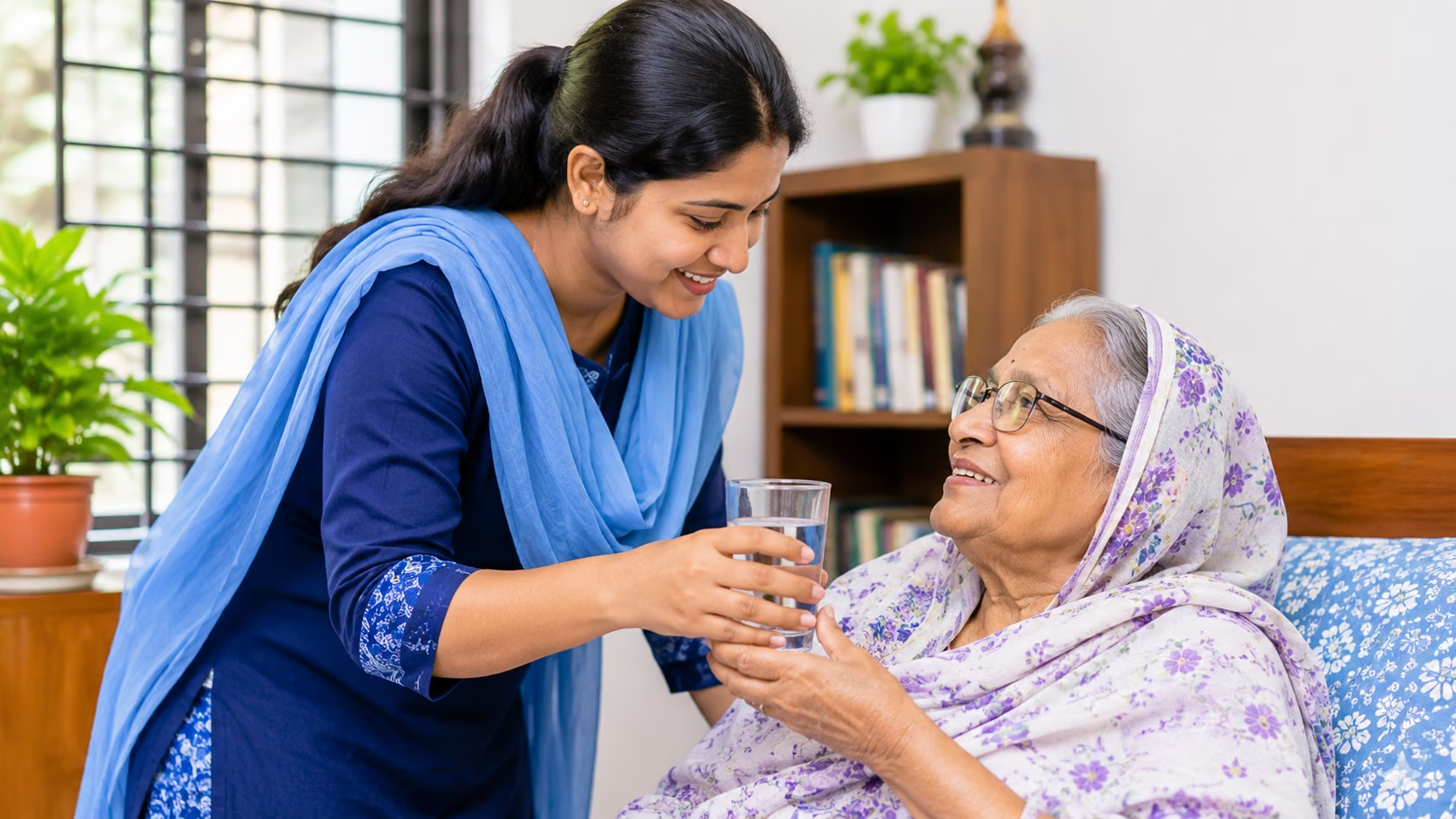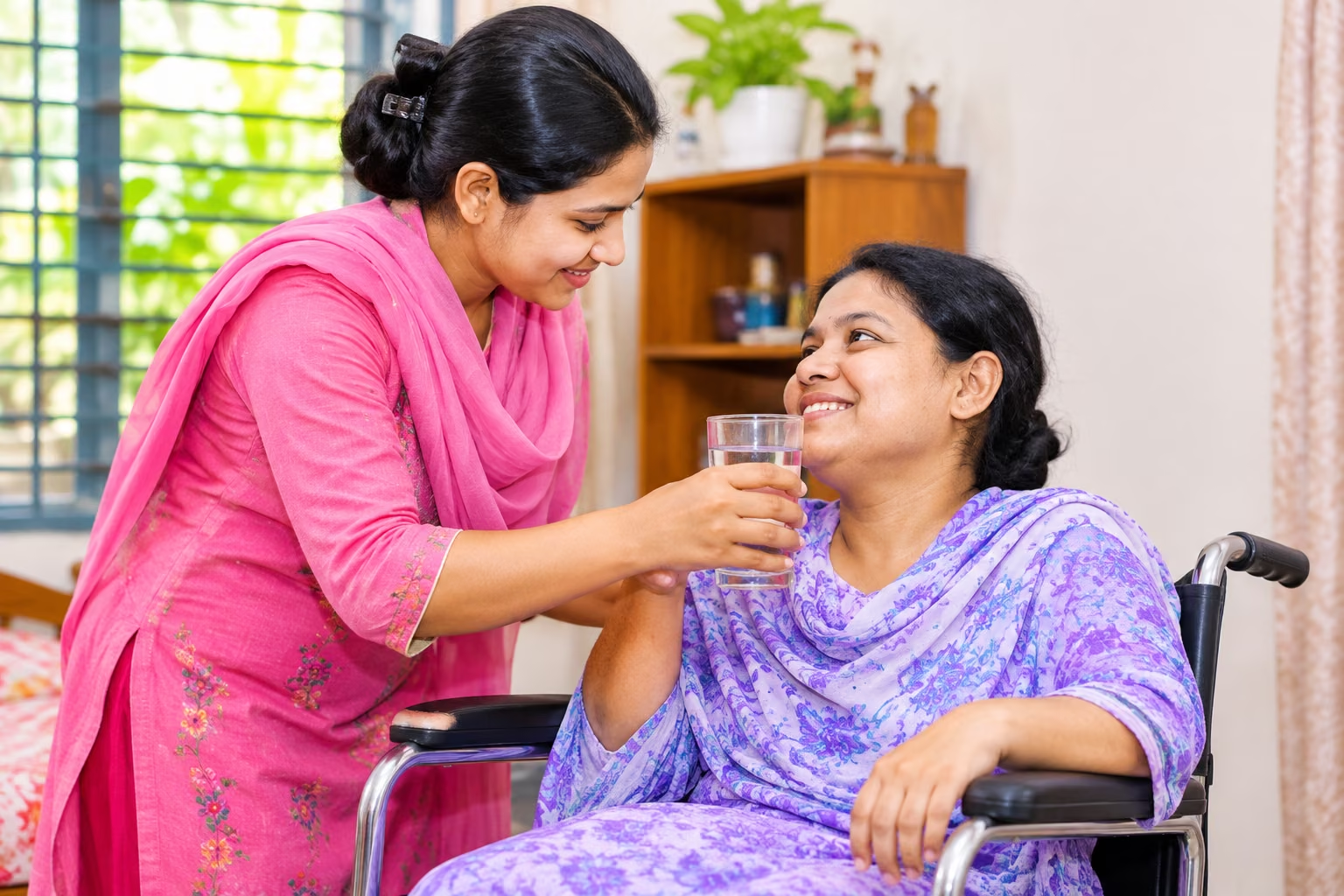
When an elderly parent or sick family member needs daily assistance, families often take responsibility for their care. However, managing patient care alongside work and household responsibilities can become difficult. This is why understanding Family Caregiver vs Professional Caregiver is important for families who want the right support for their loved ones.
Both family caregivers and professional caregivers help patients with daily activities, personal care, and emotional support. However, their responsibilities, experience, availability, and caregiving approaches can be different.
In this guide, we will compare family and professional caregiving, explain their benefits, and discuss when additional care support may be necessary.
What Is a Family Caregiver? Understanding Family Caregiving
A family caregiver is a relative or close family member who helps someone manage daily activities because of age, illness, disability, or recovery from surgery.
For example, an adult child may take care of an elderly parent, while a spouse may support their partner during an illness. In most cases, family caregivers provide assistance without receiving payment.
Their common responsibilities include:
- Preparing meals and helping with feeding
- Assisting with bathing and personal hygiene
- Helping with walking and everyday activities
- Reminding patients about prescribed medicines
- Accompanying family members to medical appointments
- Providing emotional support and companionship
- Communicating with doctors and healthcare professionals
Family caregivers usually understand the patient’s habits and personal preferences. As a result, they can provide familiar and personal support.
However, taking care of someone every day requires time and patience. Moreover, the responsibilities can become physically and emotionally demanding when a patient needs regular assistance.
What Is a Professional Caregiver? Understanding Professional Caregiving
A professional caregiver is someone hired to provide assistance to elderly people, sick patients, or individuals who need help with daily activities.
Professional caregivers may work through an agency or provide home care services independently. However, their training and experience can vary depending on their qualifications.
Their responsibilities may include:
- Helping patients with bathing and dressing
- Providing feeding and meal assistance
- Supporting walking and safe movement
- Assisting with personal hygiene
- Helping maintain a regular daily routine
- Providing companionship and emotional support
- Observing and reporting changes in the patient’s condition
Unlike family caregivers, professional caregivers provide support as part of their job. Therefore, families can arrange working hours and responsibilities according to the patient’s needs.
In addition, experienced caregivers may have practical knowledge of elderly care and patient handling. However, clinical procedures must always be performed by appropriately qualified healthcare professionals.
Family Caregiver vs Professional Caregiver: Key Differences
Although both caregiver types support patients, their roles and responsibilities are not exactly the same.
The following comparison explains the main differences between family caregiving and professional caregiving.
| Comparison | Family Caregiver | Professional Caregiver |
|---|---|---|
| Relationship | Family member or relative | Hired care provider |
| Payment | Usually unpaid | Paid for services |
| Experience | Personal caregiving experience | May have professional experience |
| Training | Formal training is not always available | Depends on qualifications |
| Availability | Depends on family responsibilities | Can be arranged for agreed hours |
| Daily Duties | Managed by family members | Based on agreed care responsibilities |
| Emotional Connection | Usually has a close personal bond | Builds a professional relationship |
| Care Planning | Usually managed by the family | Follows an agreed care plan |
As the comparison shows, both options have different advantages. Therefore, families should consider the patient’s condition, daily care requirements, and available family support before making a decision.
Benefits of a Family Caregiver: Advantages of Family Caregiving
Family caregivers play an important role in helping loved ones receive support in a familiar environment. In addition, their personal relationship with the patient can make everyday care more comfortable.
1. Emotional Connection in Family Caregiving
Family members already know the patient’s personality, habits, and preferences. Therefore, their presence can provide comfort and emotional reassurance.
2. Familiar Home Environment
Patients can continue their daily routines in a familiar place. Moreover, staying close to family members may help them feel more comfortable and supported.
3. Personal Attention from Family Caregivers
Family caregivers can notice small changes in eating habits, sleep, mood, and daily activities. As a result, they can share important observations with healthcare professionals.
4. Family Involvement in Patient Care
Family members can participate in important care decisions and communicate directly with doctors. Furthermore, they can help maintain the patient’s daily routine.
However, family caregiving also requires time, patience, and regular attention. When care responsibilities increase, additional support may become necessary.
Families can also explore elderly care in Dhaka to understand the available care options.
Benefits of a Professional Caregiver: Advantages of Professional Caregiving
Professional caregiving can help families manage daily patient care when they cannot provide all the required assistance themselves.
Here are some important benefits.
1. Flexible Working Hours for Professional Caregivers
Families can discuss suitable working hours based on the patient’s needs. For example, depending on availability, support may be arranged for 8-hour, 12-hour, or 24-hour periods.
2. Experience in Daily Patient Care
An experienced caregiver may have practical knowledge of personal hygiene, feeding assistance, mobility support, and elderly care. Therefore, families can discuss the caregiver’s previous experience before hiring.
3. Professional Support for Bedridden Patients
Bedridden patients often need regular assistance with hygiene, meals, repositioning, and daily comfort. Consequently, managing all these responsibilities alone can become difficult for family members.
Families can learn more about bedridden patient care at home to understand the daily support these patients may need.
4. More Time for Family Members
Hiring a caregiver allows relatives to continue their work and personal responsibilities. Meanwhile, they can remain involved in important care decisions.
5. Organized Daily Care Assistance
A professional caregiver can follow an agreed routine for meals, personal care, mobility, and other daily activities. In addition, families can communicate specific patient needs before the service begins.
When to Choose a Professional Caregiver Instead of Family Caregiving
Family members may manage basic care during the early stages of an illness or ageing. However, some situations require additional assistance.
Here are five common situations when professional caregiving may be helpful.
1. Elderly Parents Need Daily Assistance
Some older adults need help with bathing, dressing, eating, walking, and other everyday tasks. In such situations, a caregiver can help them maintain their daily routine.
Families looking for additional support can learn more about elderly care at home in Dhaka.
2. A Family Member Is Bedridden
Bedridden patients may need regular help with personal hygiene, feeding, changing positions, and maintaining comfort. Therefore, managing all these responsibilities alone can become difficult for family members.
3. Family Members Have Work Commitments
People who work full-time may not always be available to provide daytime or nighttime assistance. As a result, a professional caregiver can help cover agreed working hours.
4. A Patient Needs Support After Hospital Discharge
Patients recovering from surgery or a serious illness may need help with everyday activities after returning home. Meanwhile, family members may need time to manage follow-up appointments and other responsibilities.
For patients who need clinical support, families should discuss home nursing care services with qualified healthcare professionals.
5. Nighttime Assistance Is Required
Some elderly people and patients need help during the night because of mobility difficulties or frequent assistance needs. In these cases, families can discuss suitable night-shift or extended caregiver arrangements.
Can Family Caregivers and Professional Caregivers Work Together?
Yes. In fact, combining family involvement with professional caregiving can be a practical way to manage ongoing care needs.
Family members understand the patient’s personal preferences, while professional caregivers can help with agreed daily responsibilities.
For example:
- Family members can explain the patient’s habits and daily routine.
- Professional caregivers can assist with bathing, dressing, and meals.
- Families can arrange medical appointments and communicate with doctors.
- Caregivers can report changes in daily activities or general condition.
- Family members can review the care arrangement and share feedback.
Moreover, sharing responsibilities can help reduce the pressure on one family member.
The National Institute on Aging guide to sharing caregiving responsibilities provides additional information about dividing care tasks among family members and other caregivers.
How to Choose the Right Professional Caregiver for Your Family
Choosing a caregiver requires careful consideration because the person will assist your loved one with important daily activities.
Before making a decision, consider these factors.
1. Check Professional Caregiver Experience and Training
Ask about previous caregiving experience and relevant training. Also, make sure the caregiver has the skills needed for the patient’s daily care requirements.
2. Understand Care Responsibilities
Discuss the patient’s needs and clarify which activities the caregiver will handle. This way, both parties can understand their responsibilities before the service begins.
3. Verify Identity and Background
Ask the agency about its identity verification and background-check procedures. In addition, check references where possible to make a more informed decision.
4. Discuss Caregiver Working Hours
Confirm whether you need daytime, nighttime, or extended support. Also, clarify how caregiver shifts and rest periods will be managed.
5. Check Communication and Reliability
A suitable caregiver should communicate clearly with family members and report important concerns. Therefore, discuss how regular updates and feedback will be shared.
6. Consider the Patient’s Comfort
The patient should feel comfortable with the caregiver. For this reason, discuss personal preferences, privacy, language, and daily habits before confirming the arrangement.
Families can also read this guide to choosing a professional caregiver in Dhaka for additional information.
Family Caregiver vs Professional Caregiver: Which Option Is Better?
There is no single answer for every family. The right choice depends on the patient’s condition, daily assistance needs, and the family’s availability.
A family caregiver may be suitable when the patient needs occasional help and relatives have enough time to provide support.
On the other hand, a professional caregiver may be more suitable when someone needs regular assistance with personal hygiene, mobility, meals, or other daily activities.
For patients who need rehabilitation exercises, families may also consider physiotherapy home services after consulting an appropriate healthcare professional.
In many situations, combining both types of care can provide a more balanced approach. Ultimately, the patient’s safety, comfort, and individual needs should guide the decision.
Frequently Asked Questions About Family Caregiver vs Professional Caregiver
1. What Is the Main Difference Between a Family Caregiver and a Professional Caregiver?
A family caregiver is usually a relative who provides personal support, while a professional caregiver is hired to assist with daily patient care as a job.
2. Can Family Members Take Care of Bedridden Patients?
Yes. However, bedridden patients may need regular assistance and specialized clinical support. Therefore, families should arrange qualified healthcare professionals when medical care is required.
3. Do Professional Caregivers Have Formal Training?
Some professional caregivers receive caregiving training, but qualifications vary. For this reason, families should verify their experience and relevant training.
4. Can I Hire a Caregiver for 24-Hour Support?
Yes. Depending on availability and the patient’s requirements, families can discuss extended care arrangements with a caregiver agency.
5. Can a Family Caregiver and Professional Caregiver Work Together?
Yes. Family members can remain involved in care decisions while professional caregivers assist with agreed daily responsibilities.
6. When Should I Hire a Professional Caregiver?
Consider hiring one when a patient needs regular assistance, family members have limited availability, or daily care responsibilities become difficult to manage.
Final Thoughts on Family Caregiver vs Professional Caregiver
Understanding the difference between a family caregiver and a professional caregiver helps families make better decisions about patient care.
Family caregivers provide personal connection and emotional support. Meanwhile, professional caregivers can offer additional assistance with daily activities according to their experience and agreed responsibilities.
Ultimately, the right caregiving arrangement should match the patient’s needs while allowing family members to remain involved.
If your loved one needs additional assistance at home, Caregiver Agency BD can help you explore suitable professional caregiver services.
Contact Caregiver Agency BD to discuss your care requirements and available support options.