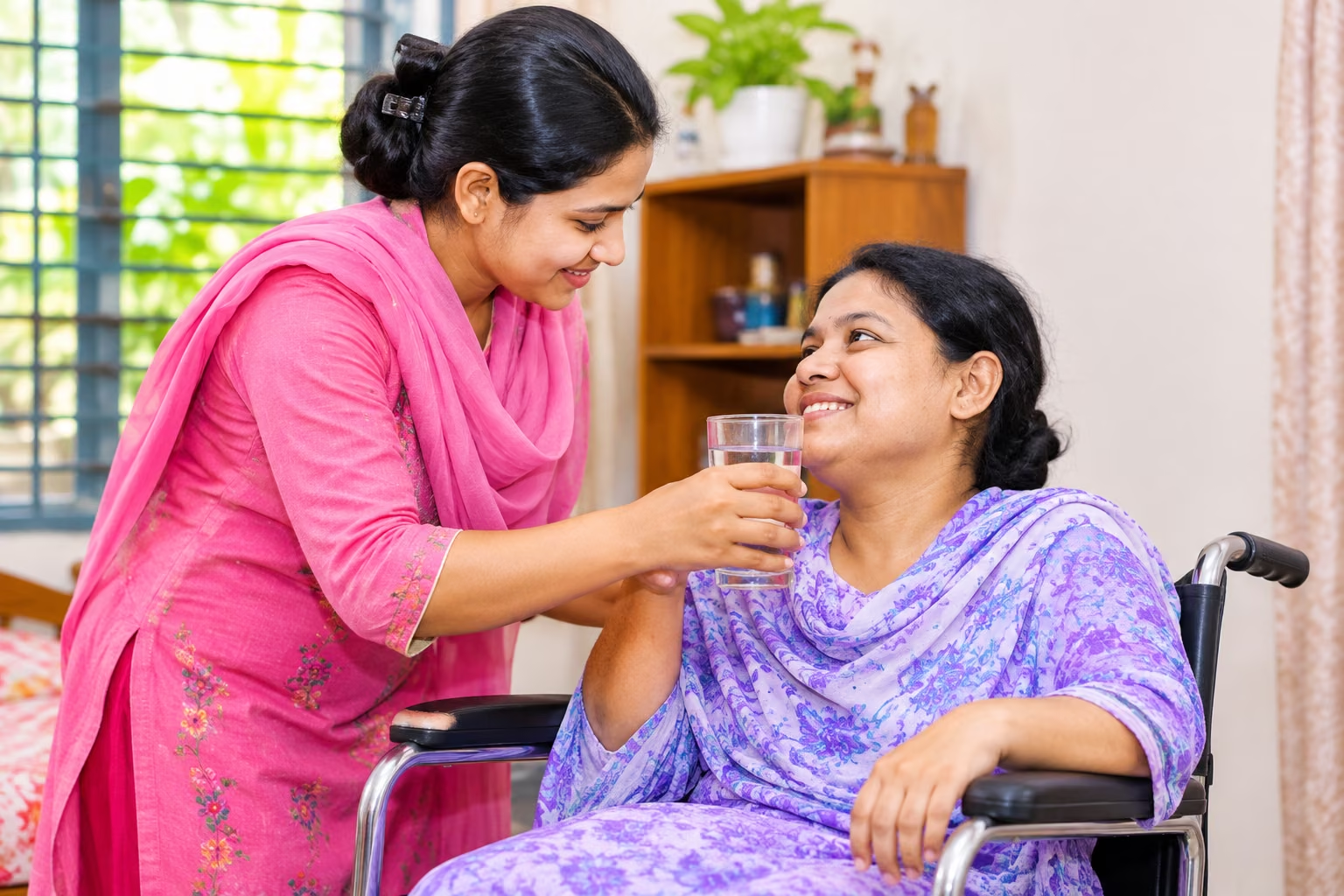
Disabled Person Care at Home helps individuals with physical disabilities receive daily assistance while staying in a familiar and comfortable environment. Some people need help with bathing, dressing, eating and moving around. Others may require regular support throughout the day. For families in Bangladesh, arranging a suitable home caregiver can make everyday responsibilities easier and help their loved ones maintain independence and dignity.
Caregiver Agency BD understands that every individual has different needs. Therefore, our caregiver support focuses on personal care, daily activities and assistance based on individual requirements and family preferences.
Why Is Disabled Person Care at Home Important?
Living with a disability does not mean someone should lose their independence. However, certain everyday activities may become difficult without additional assistance.
A suitable caregiver can help individuals manage their daily routines while allowing them to participate in activities they can safely perform independently.
Some important benefits include:
- Assistance with personal hygiene and grooming
- Help with dressing and changing clothes
- Support with meals and feeding when necessary
- Assistance with walking and wheelchair movement
- Help with everyday household activities
- Regular communication and companionship
- Support with maintaining a comfortable environment
Moreover, receiving assistance at home allows individuals to stay close to their families and familiar surroundings.
Who Needs Disabled Person Care at Home?
Disability can affect people in different ways. For example, some individuals experience movement difficulties, while others need assistance with personal activities or everyday communication.
A home caregiver may provide support to the following individuals.
1. People with Physical Disabilities
Individuals with physical disabilities may need help with walking, standing, dressing or maintaining personal hygiene. In these situations, a caregiver can assist with daily activities according to the person’s abilities.
2. Wheelchair Users
People who use wheelchairs may need assistance transferring between their bed, wheelchair and other safe seating areas. Additionally, caregivers can help arrange essential belongings within easy reach.
3. People Living with Paralysis
Individuals living with paralysis may require regular assistance with bathing, dressing, feeding, repositioning and mobility. Therefore, families should consider an appropriate care plan based on medical recommendations.
You can also learn more about our paralysis patient care service.
4. Bedridden Individuals
Some individuals spend most of their time in bed because of a disability, illness or physical limitation. As a result, they may need help with personal hygiene, meals, comfortable positioning and daily routines.
5. People Recovering from Serious Injuries
After an accident or major injury, a person may temporarily need additional assistance with movement and personal activities. In addition, a caregiver can help with everyday tasks while the individual follows a doctor’s treatment and rehabilitation plan.
Daily Responsibilities of a Disability Caregiver
The responsibilities of a caregiver depend on the individual’s condition and level of independence. Before starting a service, families should discuss the person’s daily routine and specific support requirements.
Personal Hygiene and Grooming
Maintaining personal hygiene is essential for everyday comfort. A caregiver may assist with:
- Bathing and washing
- Brushing teeth and basic grooming
- Changing clothes
- Toileting assistance
- Organizing personal belongings
Furthermore, caregivers should respect personal privacy and encourage individuals to complete activities they can safely manage themselves.
Mobility and Movement Assistance
Movement can be challenging for people with physical disabilities. For this reason, a caregiver may help with getting out of bed, sitting on a chair, using a wheelchair and moving around the home.
However, proper techniques are important when assisting someone with limited mobility. Families should follow a doctor’s or physiotherapist’s guidance, especially when lifting or transferring an individual.
Meal Preparation and Feeding Support
Some individuals need help preparing meals, while others require assistance during feeding.
A caregiver can help maintain regular meal routines, serve food and provide drinking water according to family instructions. However, if someone has swallowing difficulties, feeding arrangements should follow advice from a qualified healthcare professional.
Medication Reminders
People who take prescribed medicines regularly may need reminders to follow their medication schedule.
In addition, caregivers can help families maintain an organized daily routine according to medical instructions. Medication changes and clinical decisions should always remain with qualified healthcare professionals.
Companionship and Daily Activities
Daily care is not only about physical assistance. Communication and respectful interaction are equally important.
For example, a caregiver can spend time talking, listening and participating in suitable activities. As a result, individuals may feel more included in everyday family life.
How to Make a Home Safer for Disabled People
A suitable home environment can make daily activities easier for individuals with disabilities. Therefore, families should consider the person’s specific needs before making changes.
Here are some practical suggestions:
- Keep pathways clear: Remove unnecessary furniture and objects that may block movement.
- Improve lighting: Make sure bedrooms, hallways and bathrooms have sufficient lighting.
- Arrange essential items: Keep frequently used belongings within easy reach.
- Use suitable equipment: Consider wheelchairs, walking aids and grab bars recommended by healthcare professionals.
- Improve bathroom safety: Discuss suitable non-slip surfaces and bathroom support arrangements.
- Maintain regular communication: Ask the individual which changes would make everyday activities easier.
Moreover, a few thoughtful adjustments can make a meaningful difference to accessibility and comfort.
Male and Female Caregiver Services for Disabled People
Choosing the right caregiver is an important part of arranging home care. Personal comfort, communication and individual preferences should always be considered.
Some families prefer a female caregiver for personal hygiene assistance, while others may request a male caregiver depending on the individual’s needs.
Caregiver Agency BD can help families discuss male and female caregiver arrangements based on service availability and care requirements.
Before confirming a caregiver, families should explain the person’s condition, daily responsibilities, preferred working hours and specific assistance needs.
Disabled Person Care at Home: Available Care Hours
Every individual needs a different level of assistance. While some people need help for a few hours, others require regular support during the day and night.
Depending on availability and care requirements, families can discuss the following arrangements.
8-Hour Caregiver Support
This option may suit individuals who need assistance during specific daytime activities, including bathing, dressing, meals and mobility.
12-Hour Caregiver Support
A 12-hour arrangement provides extended daily assistance. Therefore, it may be suitable for individuals who need regular help with personal care and everyday activities.
24-Hour Caregiver Support
Individuals who need frequent assistance throughout the day and night may require an extended care arrangement. However, families should discuss staffing, caregiver rest periods and shift coverage before confirming the service.
You can explore our caregiver service options to learn more about available arrangements.
How to Choose the Right Home Caregiver
Selecting a caregiver requires careful consideration. The right person should understand the individual’s needs and communicate respectfully.
Before making a decision, consider these important factors:
- Relevant experience: Ask about experience assisting people with similar physical limitations.
- Training: Check whether the caregiver has suitable caregiving training.
- Communication: Choose someone who listens and communicates clearly.
- Patience: Daily personal care requires understanding and respect.
- Reliability: Discuss working hours, attendance and replacement arrangements.
- Family coordination: Make sure the caregiver understands the agreed care plan.
Additionally, families can read our guide to personal care assistance at home for more information about everyday support.
When Is Professional Nursing Support Needed?
A caregiver can help with everyday personal activities. However, some health-related tasks require a qualified nurse.
For example, wound dressing, injections, catheter care and other clinical procedures may require professional nursing skills.
If an individual needs medical attention at home, families can explore our on-call nursing service in Dhaka.
Similarly, people recovering after hospitalization may benefit from appropriate patient care at home in Dhaka.
For additional information about disability and health, read the World Health Organization’s disability fact sheet.
Why Choose Caregiver Agency BD?
Finding suitable daily care for a family member is an important decision. Caregiver Agency BD helps families discuss their requirements and explore caregiver arrangements for elderly people, patients and individuals with disabilities.
Families can discuss:
- Male and female caregiver preferences
- Personal hygiene and daily living assistance
- Mobility and wheelchair support
- Bedridden patient care
- Day and night caregiver arrangements
- 8-hour, 12-hour and 24-hour support options
- Individual care requirements and family preferences
Furthermore, our team considers the person’s daily needs before discussing a suitable caregiver arrangement.
You can also explore our professional caregiver service in Dhaka and caregiver pricing plans for more information.
Frequently Asked Questions
1. Can I arrange Disabled Person Care at Home?
Yes. Families can arrange a home caregiver to assist with personal hygiene, dressing, meals, mobility and other daily activities according to individual requirements.
2. Are female caregivers available for disabled women?
Female caregiver arrangements can be requested based on personal preferences, care requirements and service availability.
3. Can a caregiver help someone who uses a wheelchair?
Yes. A caregiver can assist with everyday activities, wheelchair-related mobility support and transfers when properly trained and instructed.
4. Do caregivers provide 24-hour support?
Extended care arrangements can be discussed depending on the individual’s needs, staffing requirements and service availability.
5. Does a disabled person always need a full-time caregiver?
No. Some individuals only need assistance for a few hours each day. Therefore, the required schedule should depend on their independence, daily routine and family support.
6. Can a caregiver provide medical treatment?
Caregivers generally assist with everyday activities and personal care. However, medical procedures should be performed by appropriately qualified healthcare professionals.
7. How can I arrange disability care at home in Bangladesh?
Contact Caregiver Agency BD, explain the person’s condition and daily support needs, and discuss caregiver preferences, working hours and availability.
Arrange Disabled Person Care at Home with Caregiver Agency BD
Every person deserves respect, independence and appropriate support in daily life. With the right assistance, individuals with disabilities can manage everyday activities more comfortably while staying connected with their families.
If your loved one needs help with personal care, mobility, meals or regular daily activities, Caregiver Agency BD can help you discuss suitable home caregiver arrangements.
Contact Caregiver Agency BD
Website: https://www.caregiveragencybd.com/
Phone: +8801739-508350
Contact our team to discuss your requirements and available caregiver support.